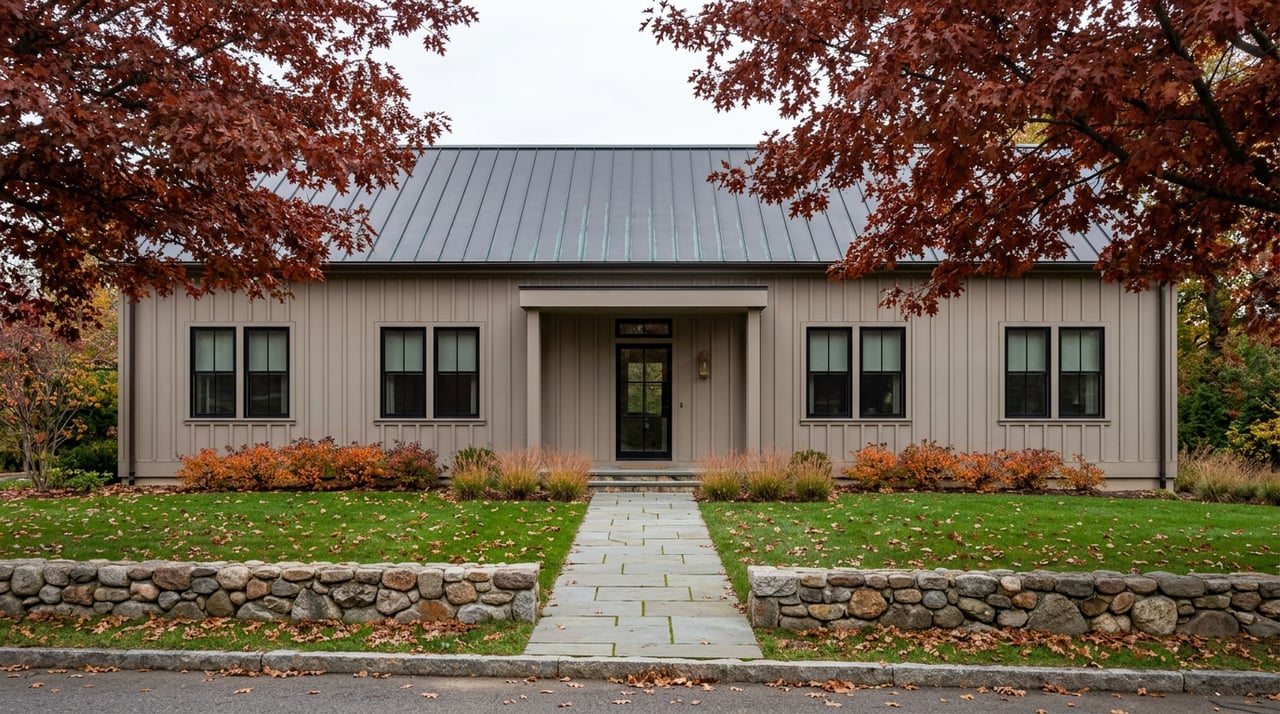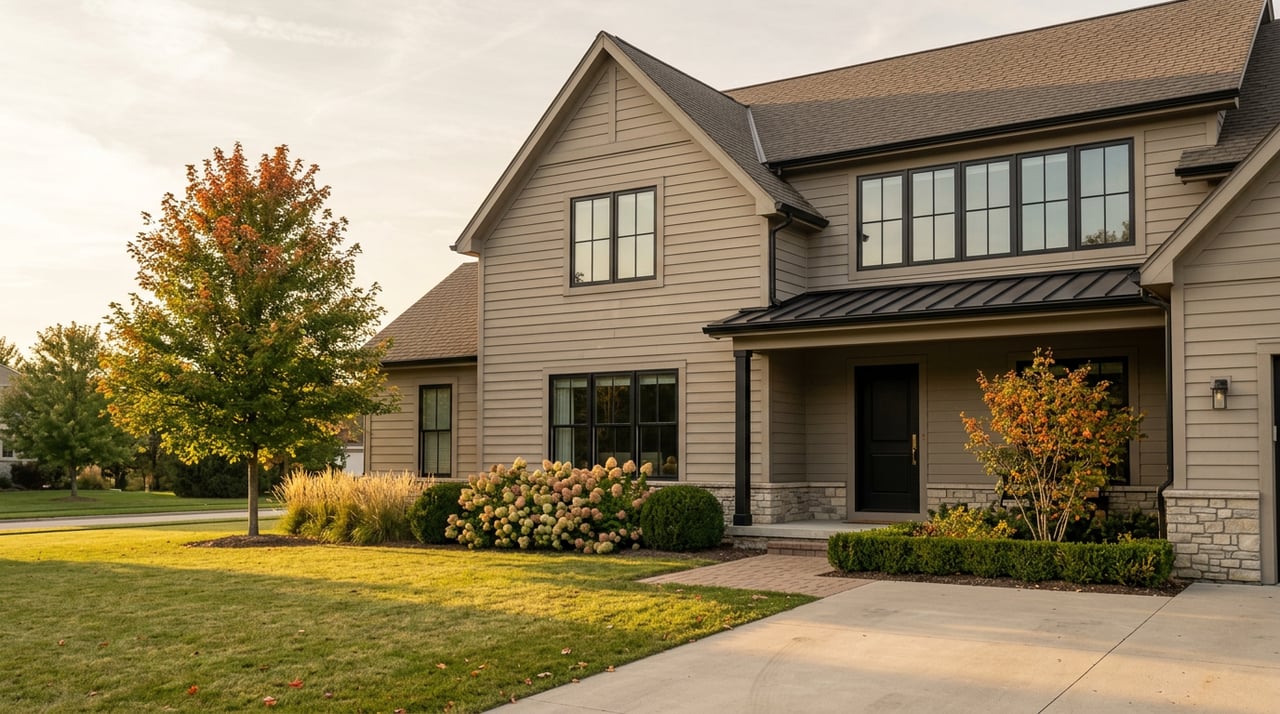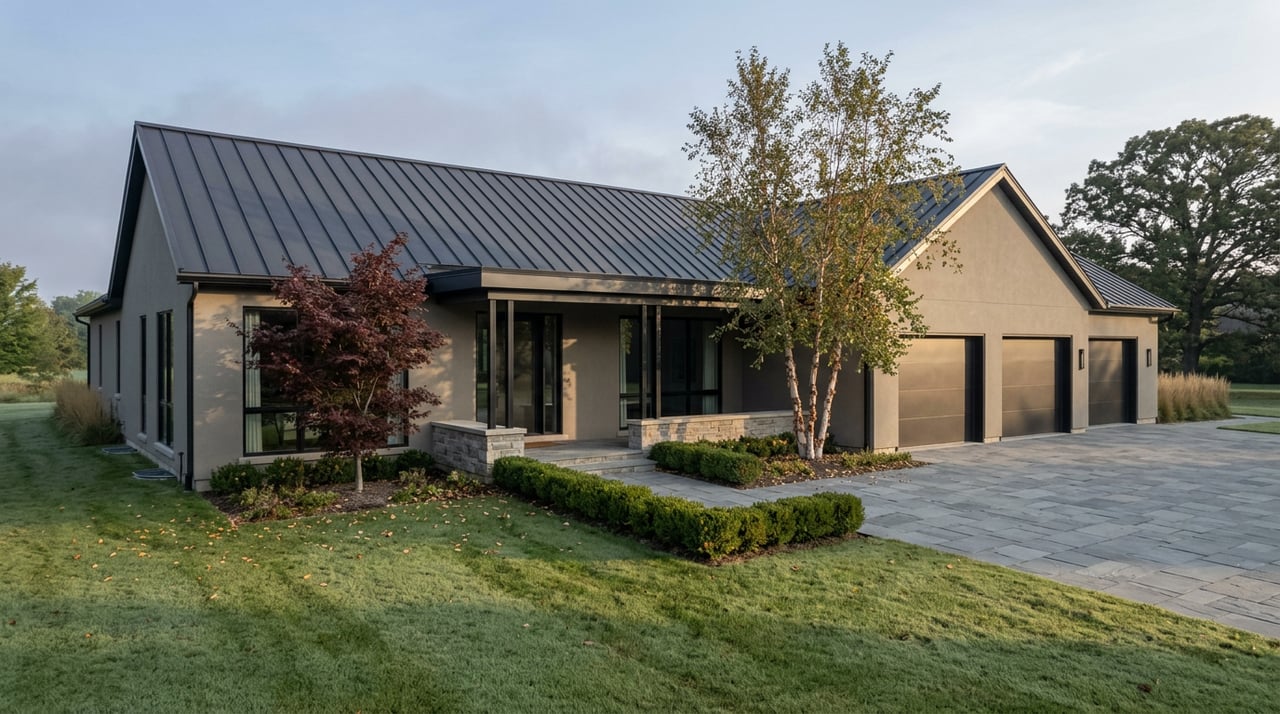
Tour a $650,000 colonial in Addison on a Saturday morning, then drive fifteen minutes south to see a $650,000 farmhouse near the river in the afternoon, and you will notice something the listing sheets never explain. One house sits on a third of an acre with town water and sewer humming along underground. The other sits on two acres because it has to, with its own well and its own septic field doing the work that a municipal pipe does everywhere else in town. Same town. Same price tag. Two completely different sets of rules governing what you own and what you are responsible for maintaining.
That gap is the reason a single "Glastonbury median home price" is close to useless for anyone actually comparing neighborhoods here. The number blends a sewered, town-watered market in the northern and central parts of town with a well-and-septic market in South Glastonbury, and those two markets behave differently enough that averaging them together tells you less than looking at either one on its own.
One Town, Two ZIP Codes, Two Utility Systems
Glastonbury runs on two ZIP codes: 06033 covers Glastonbury Center, Addison, Buttonball, Naubuc, and East Glastonbury, while 06073 covers South Glastonbury. The line between them is not just a postal quirk. It roughly tracks where the town's water and sewer infrastructure ends and private wells and septic systems take over.
The town's own billing structure makes the split explicit. Glastonbury's Water Pollution Control Division bills metered customers by consumption, but it also has a separate line item for homes on well water that still connect to the sanitary sewer, calculated against an assumed average usage rather than a meter reading. That single billing distinction tells you the town has long treated "on well" and "on town water" as two different customer classes, because they are.
School assignments track the same divide. Buttonball Lane, Naubuc, Hebron Avenue, and Eastbury serve the 06033 side of town. Hopewell and Nayaug, both physically located in South Glastonbury, serve 06073. A buyer choosing between "Glastonbury schools" is really choosing between two attendance zones shaped by the same water-and-sewer line.
Why South Glastonbury Lots Run Bigger: It's Engineering, Not Just Preference
The easy explanation for South Glastonbury's larger parcels is that buyers there want privacy and land. That is true, but it is not the whole mechanism. A lot of that acreage exists because the septic system requires it.
Glastonbury's Health Department, which permits every septic installation in town, requires five feet of naturally occurring soil between bedrock and the bottom of a leach field, and two feet of soil between the maximum groundwater level and the leach field. Every new system also needs a primary leach field and a full reserve area sized and tested independently, with well placement factored into the distance calculations before anything gets approved. On a lot with thin soil over ledge, or a high water table, that math can force a house and its septic system apart by a wide margin, and it can rule out a second smaller lot from ever being carved out of the parcel.
In other words, the half-acre lots common in Addison and the two-to-five-acre lots common in South Glastonbury are not simply a matter of what developers chose to build decades apart. They reflect what a septic engineer can certify on that particular soil. A buyer who assumes they can subdivide a five-acre South Glastonbury property because "there's plenty of room" is making an assumption the town's own percolation rules may not support.
The Sewer Line Being Replaced on Cider Mill Road Right Now
The clearest evidence that this is a live infrastructure divide, not a historical footnote, is sitting on Cider Mill Road this month. Glastonbury Patch reported that the town began replacing roughly 1,000 feet of sanitary sewer force main there around September 1, 2026, work being performed by Sunset Valley Construction for the town's Water Pollution Control Division. The project is expected to take up to 30 days and will not interrupt sewer service, because a temporary bypass line will carry sewage from the Cider Mill Pump Station to the existing manhole at West Ledge Road while the old cast-iron main is swapped out.
That is what it looks like to own a home connected to a shared municipal system. The town plans the work, hires the contractor, and absorbs the responsibility for keeping the pipe underneath your street functional. A homeowner on a private septic system in South Glastonbury does not get that safety net. When a leach field starts failing, it is the homeowner who schedules the site investigation, pays for the new system design, and covers installation, with no town crew coming to fix a shared line because there is no shared line.
What a Given Budget Actually Buys on Each Side of the Line
The price data breaks along the same fault line once you stop averaging it.
In Addison, current listings this September cluster around a $449,900 median, with single-family resales typically running $350,000 to $600,000 depending on age and lot condition. Buyers here are close to Square Peg Pizzeria and Berkins Blend Café, with a Whole Foods, Trader Joe's, and Stop & Shop just across Route 2, all served by town water and sewer.
East Glastonbury, which includes the Eastbury area, has run hotter. Over the twelve months ending this summer, its median sale price reached $675,000, up 13 percent from the prior year, with homes moving in a median of 33 days against a roughly 55-day national pace. That is still inside the 06033, sewered side of town.
South Glastonbury is where the acreage premium shows up most clearly. Listings there routinely clear $800,000 this year, especially on parcels near the river or backing to preserved land like the roughly 70-acre Great Pond Preserve. Homes in this section sit near landmarks like Highland Park Market rather than a shopping plaza, and buyers are paying for both the land and the septic capacity that land was engineered to support.
Zoom back out to town-wide numbers and the blending problem is obvious. As of early September 2026, one widely used home-value index put Glastonbury's average home value at $560,400, up 5.4 percent from a year earlier. A separate tracker recorded a median sale price of $597,450 in May 2026. Neither number tells you whether you are looking at a sewered starter colonial in Addison or a well-and-septic estate in South Glastonbury, because both get folded into the same town-wide figure.
What This Means If You're Comparing Neighborhoods
If you are choosing between Glastonbury sub-areas, the water and sewer question deserves the same weight as school assignment or commute time. A few things worth asking before you fall for a listing photo:
- Is the property on town water and sewer, or private well and septic? This single fact changes your ongoing maintenance responsibility and your utility bill structure for as long as you own the home.
- If it's on septic, when was the system last pumped and inspected, and does the file on record with the Health Department show a reserve area that's still intact?
- If you're picturing a future addition, guest house, or subdivision on a larger South Glastonbury lot, has anyone actually run a percolation test on the section you're picturing, or are you assuming space that the soil won't support?
Our Glastonbury neighborhood guide breaks down more of what daily life looks like on each side of town, and our buyers guide walks through the inspection and financing questions that matter most once you've picked a side of that line.
A Few Questions Worth Settling Early
Can I get town water and sewer in South Glastonbury? Most of South Glastonbury sits outside the current town water and sanitary sewer service area, so plan on well and septic unless a specific parcel already has an existing connection or stub. Ask early, because extending service to an individual lot is neither quick nor guaranteed.
Does a bigger lot in South Glastonbury always mean there's a septic reserve area? Often, but not automatically. Older systems installed before current soil-clearance rules may not have a documented reserve area at all. The town's Health Department keeps septic as-built records going back to the late 1950s, many viewable through the town's GIS system, and it's worth reviewing that file before assuming a lot has room to expand.
Is South Glastonbury pricing simply a school-district effect? School quality plays a role, but it doesn't explain the acreage gap on its own, since Hopewell and Nayaug serve a section of town with materially larger average lots than the 06033 schools. The septic and well infrastructure underneath those lots is doing real work in the price difference, alongside the schools.
If you're weighing a move between these two sides of Glastonbury, or comparing Glastonbury against another Hartford County suburb altogether, the Danais & Gordon Team can walk you through what a specific ZIP code, lot, and septic history actually mean for your search, and help you figure out which half of town fits the way you actually want to live.